Turning Obstacles into Strategic Advantage
The power of constraints means that limitations can drive creativity and efficiency. 80% of executives believe their current business models are at risk of disruption, and 84% say innovation is key to their growth strategy. However, only 6% are satisfied with their innovation performance.
When you face restrictions - whether in time, resources, or tools - you’re often pushed to think outside the box and find creative solutions.
80% agree that creativity sparks audience engagement and economic growth. Constraints focus your efforts, reduce options, and encourage more thoughtful decision-making, leading to unexpected, creative results.
Instead of obstacles, constraints can drive productivity and innovation, enhancing creativity and helping you find better solutions.
What if the constraints your business faces today are the key to unlocking the breakthrough innovations of tomorrow? How can the constraints you face inspire creative solutions that will drive your company's growth and success?
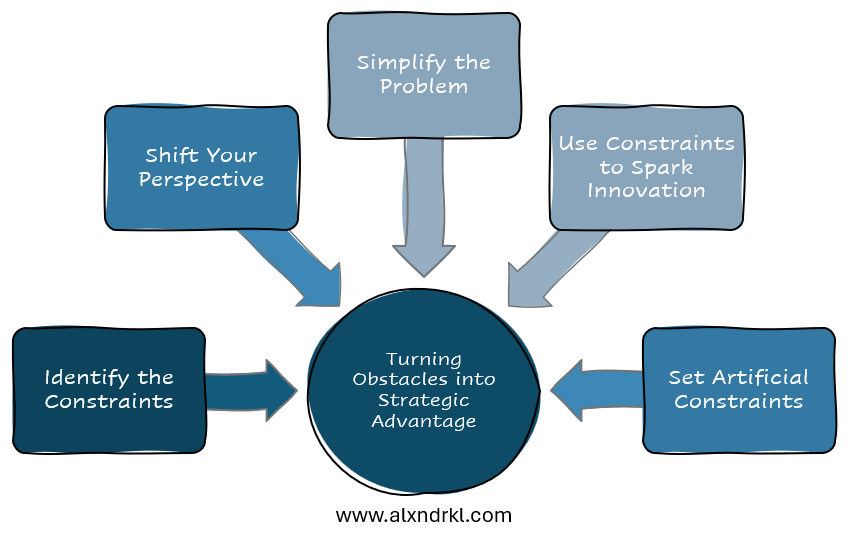
1. Identify the Constraints
Define limits clearly, including time, budget, tools and rules. You analyse what remains possible within them, so focus on practical solutions and avoid wasting effort on unrealistic options.
Understand the limitations: Define the situation and its constraints to get a clear picture of the problem and identify a straightforward solution. These constraints might include time limits, budget restrictions, available tools, or specific guidelines.
Clarify the challenge: Analyse the problem within the boundaries of these constraints to understand what’s restricted and what resources you still have. This clarity helps you focus on realistic solutions and prevents wasted effort on unavailable options.
How effectively are you working within constraints to generate realistic and actionable solutions?
Example: If you have a limited budget for a project, identify exactly how much you can spend and what resources that budget covers.
2. Shift Your Perspective
Treat constraints as opportunities to think creatively. Ask better questions about using what you have, helping you find inventive, practical solutions instead of focusing on what is missing.
Reframe the constraints as opportunities: Instead of viewing constraints as obstacles, see them as opportunities that encourage creative thinking. Embracing these challenges helps you explore new possibilities and find innovative solutions you might not have considered otherwise.
Ask different questions: Shift your focus from what’s missing to how you can creatively use what you already have. This mindset helps you maximise available resources and discover innovative solutions within existing limitations.
What new possibilities emerge when you view constraints as a catalyst for creativity?
Example: "How can I deliver value with this budget?" instead of "Why don't I have enough funds?"
3. Simplify the Problem
Focus on essentials, removing distractions to address what matters most. Prioritise high-impact actions within limits, ensuring your effort delivers results without spreading yourself too thin across less important tasks.
Focus on essentials: Constraints push you to simplify the problem, focusing on its most essential components. This eliminates distractions and helps you concentrate on what truly matters, leading to more effective and focused problem-solving.
Prioritise: With limited resources, prioritise the most critical aspects of the solution to ensure you focus on what truly matters. This helps you maximise impact while staying within the constraints of time, budget, or tools.
Which elements of the problem are most critical and how can you concentrate your resources on them?
Example: If time is short, focus on the highest-impact tasks rather than trying to tackle everything.
Creativity needs constraint. When the constraints get tighter, you will find more opportunities to be creative! - Jonny Sun
4. Use Constraints to Spark Innovation
Explore unconventional ideas shaped by constraints, combining elements in inventive ways. Break the problem into parts, solve each creatively, then bring them together into a clear, effective overall solution.
Explore unconventional solutions: Constraints encourage you to think outside conventional approaches, often sparking more inventive methods or unique combinations. These limitations can drive creativity, leading to solutions that you might not have considered otherwise.
Break the problem into parts: Break the problem into smaller portions within the given constraints, focusing on each part individually. This allows you to explore creative solutions and piece them together into an effective, cohesive overall solution.
How can constraints inspire new ways of thinking and lead to solutions you wouldn’t normally consider?
Example: A product designer with limited materials might combine unusual materials or design a simpler, more effective product.
5. Set Artificial Constraints (When Needed)
Prioritise what matters most within set limits, staying focused and efficient. When freedom feels overwhelming, you add constraints, like tighter deadlines, to encourage quicker thinking and more inventive solutions.
Focus on priorities: You decide what matters most within the limits you set, helping you stay efficient, reduce distractions, and produce clear, purposeful results under pressure.
Impose additional limits: If you feel overwhelmed by too much freedom, impose new constraints to spark creativity. For example, set a tighter timeframe or limit your tools, pushing you to find innovative solutions within those boundaries.
What tasks or decisions could benefit from self-imposed limits to drive sharper, more creative outcomes?
Example: For a creative project, you could impose a 48hour deadline to challenge yourself to act quickly and efficiently.
The Power of Constraints (Phil Hansen, Speaker @ TED)
Sample Case: Dyson
Facing strict regulatory limits on dust emissions and growing consumer frustration with loss of suction, Dyson constrained its engineering teams to eliminate disposable bags entirely while maintaining constant airflow. Budget discipline and performance targets forced radical rethinking of conventional vacuum design.
Rather than adding complexity, Dyson focused effort on a single constraint: airflow efficiency. Engineers applied cyclonic separation principles, concentrating resources on fewer, high-impact design variables. This constraint-led focus reduced design trade-offs and accelerated prototype testing under real-world conditions.
The resulting bagless vacuum delivered sustained suction, reduced maintenance and differentiated Dyson in a saturated market. What began as regulatory and technical limitation became a platform for repeatable innovation, enabling Dyson to scale the same constraint-driven approach across fans, hand dryers and haircare products.
Key takeaway: Well-defined constraints can concentrate effort on the few factors that matter most. By narrowing choices rather than expanding them, organisations can convert limits into sources of speed, clarity and commercially defensible innovation.
"Where resources are plentiful, you will find very little creativity. Where resources are scarce, you will find an abundance of creativity." - Andy Murray
Ultimately, embracing constraints can change the way you approach problem solving. Instead of being overwhelmed by constraints, see them as a framework that guides your creativity and decision-making. As you tackle challenges, focus on what really matters, think innovatively and remain adaptable. Using constraints effectively can unlock unexpected solutions and drive progress.
Welcome the constraints you face but also take a step back and assess how they can lead to growth - how can you turn the constraints in your business into powerful drivers of creativity and efficiency? This shift in mindset will help you discover more opportunities than you might have imagined.
