Improve Efficiency Through Organisational Alignment
Updated: Apr 1
Have you ever wondered how organisational alignment affects employee engagement and business performance? It is important to understand this connection, as alignment influences internal motivation, customer satisfaction, operational efficiency and long-term profitability across your organisation.
Research shows that 68% of companies with poor alignment struggle with low employee engagement, which limits productivity and innovation. Conversely, organisations that prioritise alignment enjoy the benefits of higher morale, clearer communication and more motivated teams, creating an environment in which staff are empowered to perform consistently at their best.
The effects extend beyond employees. Only 30% of companies with low alignment report satisfied customers, compared with 97% of those with high alignment. Aligned organisations also grow revenue 58% faster and achieve 72% higher profitability, demonstrating that alignment is a critical driver of both engagement and financial success.
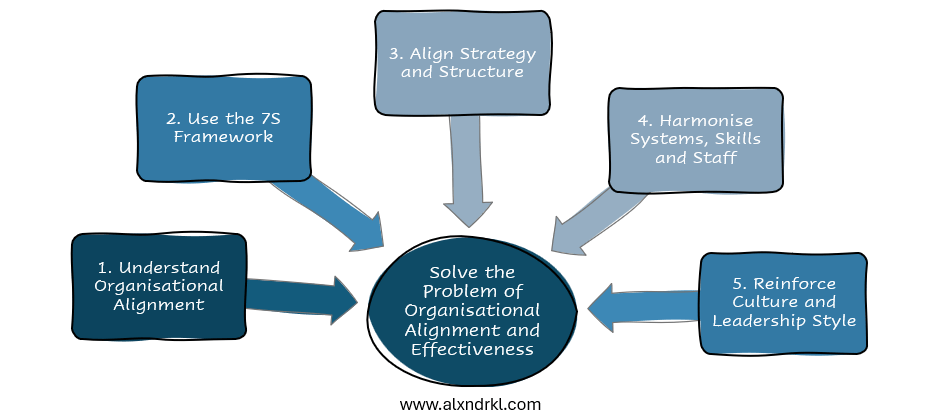
1. Understanding Organisational Alignment
Organisational alignment ensures that all parts of your company support the same overall goals. Examining areas such as strategy, structure, systems, staff, skills, style and shared values allows you to identify inconsistencies that can slow down decision-making processes, reduce efficiency and create confusion. This enables you to prioritise improvements for greater cohesion.
Maintaining alignment requires ongoing evaluation. Observe how processes, roles and leadership interact and whether staff skills meet organisational needs. Identifying gaps enables you to take targeted action to boost productivity, morale and outcomes. Regular reviews ensure that alignment persists, even when strategies or external conditions change, thereby sustaining effectiveness and resilience.
Review core strategy and objectives.
Examine organisational structure and reporting lines.
Evaluate processes and systems.
Assess staff skills and leadership style.
Consider shared values and culture.
Which parts of your organisation support each other effectively and where do small adjustments offer the biggest benefits?
Example: A healthcare provider reviews its strategy, team structures and internal processes and discovers that patient care teams are working in silos. Through realigning roles and enhancing communication channels, the provider reduces delays, fosters collaboration and boosts overall patient satisfaction.
2. Using the 7S Framework as a Diagnostic Tool
The 7S Framework enables you to visualise organisational components and swiftly pinpoint misalignments. Mapping strategy, structure, systems, staff, skills, style and shared values helps you to understand the connections between them, revealing areas that reinforce or conflict with each other. This guides the implementation of effective interventions and promotes stronger cohesion.
Systematic application of the framework ensures that no area is overlooked. You can identify strengths to build on and weaknesses needing attention, prioritising actions that deliver real impact. This approach provides a practical plan for improving alignment, enabling teams to focus on objectives and adapt to changes efficiently.
Map all seven elements visually.
Identify areas of strong alignment.
Detect inconsistencies or conflicts.
Evaluate which elements drive performance.
Prioritise corrective interventions.
Which organisational elements create friction and which adjustments would produce the greatest improvement?
Example: A technology firm uses the 7S Framework to map its strategy, structure and staff capabilities. They discover that outdated systems are slowing project delivery despite strong leadership and skilled staff. By updating their workflow tools and retraining teams, they improve efficiency and accelerate product launches.
3. Aligning Strategy and Structure
A strategy must be supported by the right structure to enable its execution. Misaligned hierarchies and unclear reporting lines impede decision-making and progress. Reviewing the structure against strategic goals ensures that responsibilities and workflows are clear, thereby empowering staff to act efficiently and successfully execute objectives.
Clear structures reduce duplication, clarify accountability and enable teams to focus on results. Roles that support strategic objectives enable staff to contribute effectively and without confusion. Adjustments may include redefining responsibilities, forming cross-functional teams, or eliminating bottlenecks to ensure organisational agility and alignment with strategy and operational goals.
Examine reporting lines against strategic priorities.
Clarify roles and responsibilities.
Remove redundancies and overlaps.
Create structures that enable decision-making.
Communicate changes clearly to staff.
Does your structure support strategy effectively and where do bottlenecks reduce efficiency?
Example: A financial services company realigns its departments to match strategic growth areas, creating cross-functional teams for product development. This reduces approval delays, clarifies accountability and accelerates the launch of new services.
"Every company has two organizational structures: The formal one is written on the charts; the other is the everyday relationship of the men and women in the organization." - Harold Geneen (American Businessman & Former President of ITT)
4. Harmonising Systems, Skills and Staff
Your organisation’s operational backbone relies on systems, skills and staff. Even the strongest strategy fails if processes are inefficient or employees lack necessary capabilities. Evaluating these elements uncovers gaps and ensures operational components work together, delivering consistent, high-quality results across all teams and functions.
Aligning systems, skills and staff also boosts morale and minimises errors. Processes must support workflow, employees need the right capabilities and motivation and skills should match organisational requirements. Closing gaps improves productivity and efficiency, enabling teams to execute strategy effectively while maintaining cohesion, adaptability and overall strong performance.
Audit systems and workflows for efficiency.
Identify skills gaps and training needs.
Assess staff deployment and capabilities.
Introduce tools to support work processes.
Ensure all elements complement each other.
Are your staff and systems equipped to achieve strategy and what adjustments would boost performance?
Example: A manufacturing company audits its production systems and finds that outdated software and inconsistent skill levels are reducing output. They enhance efficiency, reduce errors and improve overall team performance by upgrading tools and providing targeted training.
5. Reinforcing Culture and Leadership Style
Culture and leadership shape daily behaviour and interaction with strategy. Even with efficient systems and clear plans, misaligned values or ineffective leadership can undermine performance. Assessing whether shared values and leadership style support goals encourages behaviours that reinforce alignment, collaboration and accountability across teams.
Leadership and culture require intentional effort. Leaders model behaviours, while culture establishes expectations influencing decision-making and teamwork. Addressing gaps through communication, training and recognition ensures consistent application of values. Aligning leadership and culture strengthens engagement, reduces resistance and ensures everyone acts to support the organisation’s long-term effectiveness and objectives.
Evaluate shared values and beliefs.
Assess leadership consistency and style.
Encourage behaviours that support strategy.
Address cultural conflicts proactively.
Recognise and reward alignment with values.
Does your culture encourage collaboration and efficiency and how can leadership model desired behaviours better?
Example: A retail chain has noticed that its store managers are applying policies inconsistently, which is causing frustration among staff. Standardising leadership training and recognising employees who embody company values helps to cultivate a more cohesive culture, improving team collaboration and customer service.
Driving Success Through Alignment, Collaboration and Accountability | Johann Butting (EMEA Head of Slack)
Sample Case: Sightsavers International
Sightsavers International, a global non‑governmental organisation working to eliminate avoidable blindness, undertook a two‑year strategic transformation to improve organisational alignment and effectiveness by clarifying its vision and mission and engaging staff worldwide in strategy workshops. The initiative used a strategy map and implementation frameworks to connect high‑level goals with operational plans across functions.
Staff, board members and partners participated in developing “Strategy Implementation and Monitoring (SIM) cards,” tools that cascade organisational objectives into measurable indicators for every country team. A global employee survey showed 92 % understood the new vision and mission, 87 % understood the SIM cards, 81 % felt engaged and enthused about the future, highlighting significant alignment and engagement gains.
Sightsavers now uses online dashboards and regular performance data reviews to monitor progress against strategy, linking organisational effectiveness directly to measurable outcomes in eye health, education and social inclusion programmes. This alignment helps ensure resources, staff efforts and partner activities support shared strategic goals.
Key Takeaway: Sightsavers International illustrates how structured organisation‑wide strategic alignment improves employee understanding and engagement. By involving teams in developing clear objectives and measurable performance indicators, it enhances alignment with strategic goals and overall organisational effectiveness.
"Building a visionary company requires one percent vision and 99 percent alignment." - Jim Collins (American Author)
Organisational alignment is not a one-time achievement, but rather an ongoing process. Using the McKinsey 7S Framework provides clarity on the interconnection of strategy, structure, systems, staff, skills, style and shared values. Focusing on these elements ensures long-term effectiveness, cohesion and resilience within your organisation.
As you move forward, reflect on areas where alignment may be slipping and address these issues promptly. Prioritise small, consistent improvements rather than attempting sweeping changes all at once. These incremental improvements will build lasting alignment, boost morale and strengthen your organisation’s ability to respond confidently to challenges.
Which element of your organisation - strategy, structure, or culture - needs the most attention to improve overall alignment?
